
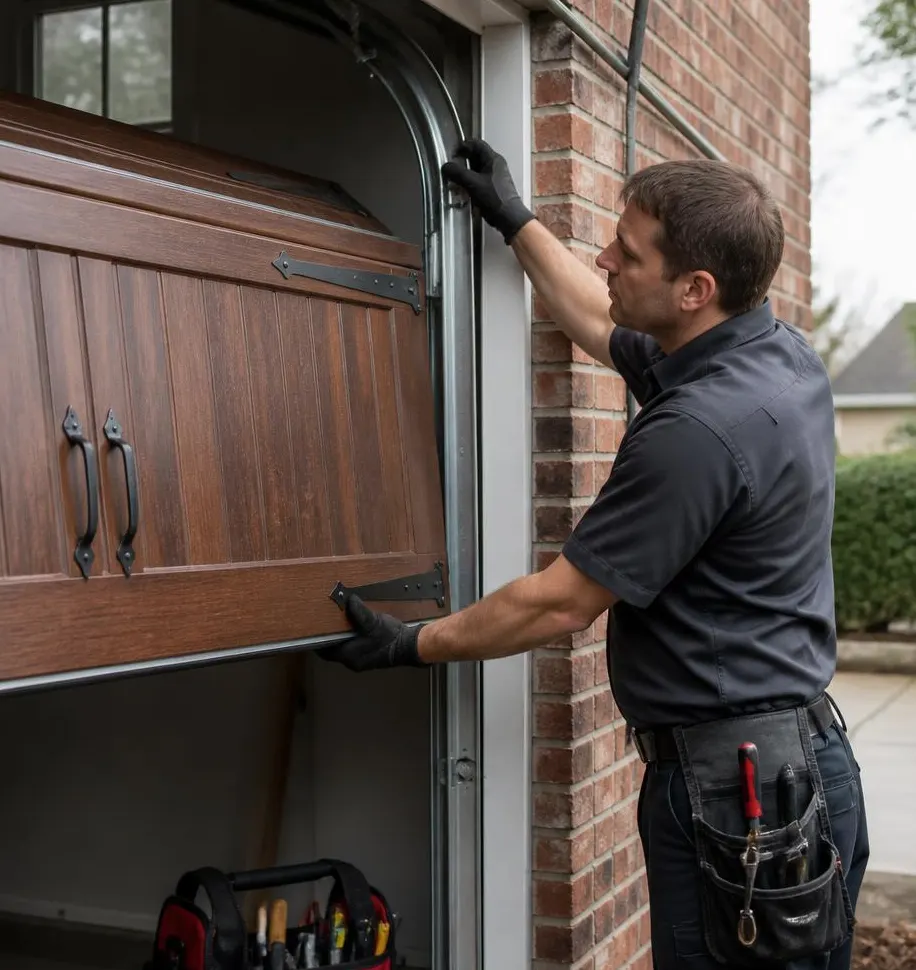
Winterizing Your Garage Door Before Gladstone's First Hard Freeze
Short answer: before temperatures drop below freezing for good, replace worn weatherstripping, lubricate hinges and rollers with a cold-rated lithium grease, test the spring balance, check the opener's battery backup, and clear salt and grit off the tracks and photo-eye sensors. Do this in late fall and you'll avoid the three most common winter garage door calls: a door that won't seal, a door that won't move because a spring snapped in the cold, and a door that won't open during a power outage.
Why this matters more here than in milder climates
Clay County winters bring hard freezes, ice storms, and road salt, all of which stress a garage door system in specific ways. Steel springs and torsion bars lose some flexibility as temperatures drop, which is why a disproportionate number of broken springs happen on the first truly cold mornings of the season rather than in the dead of January. Big swings between warm fall afternoons and freezing nights also cause wood and composite doors to expand and contract, which can loosen hardware or open gaps in the seal. None of this is dramatic on its own, but it adds up if the door goes into winter already worn.
Seal the door against cold air and moisture
The bottom seal (the rubber gasket along the floor) and the side and top weatherstripping are your main defense against cold drafts, and in an attached garage, a bad seal translates directly into a colder mudroom or utility space. Look for:
- Cracked, flattened, or torn rubber on the bottom seal
- Gaps where daylight shows around the sides or top of the closed door
- A threshold seal (if installed) that's worn thin from a season of wet boots and road salt tracked in
Bottom seals are inexpensive to replace and it's worth doing before the first snow rather than after, since a stiff, cold seal is harder to work with and easier to tear during installation. If the garage is attached and used as a buffer space for mechanicals or storage, a worn seal is also how cold, salty moisture gets tracked onto the slab, which speeds up rust on anything metal stored nearby, including the door's own hardware.
Check the springs before cold snaps, not during one
Torsion springs do more cycles of flexing during winter because steel is less forgiving when it's cold, and a spring that was already near the end of its life in September is a strong candidate to fail on a 15-degree morning. A few signs a spring is close to the end:
- The door feels noticeably heavier when lifted manually
- A visible gap in the spring coil itself
- A loud bang from the garage (a spring breaking) followed by a door that won't open with the opener
Springs are under high tension and this is not a DIY repair — a spring replacement should be handled by someone with the right bars and clamps. But a simple balance test is something a homeowner can do: disconnect the opener, lift the door halfway by hand, and let go. A properly balanced door stays roughly in place. If it drops or shoots up, the springs are compensating poorly and should be inspected before they're asked to do extra work all winter.
Lubricate with the right product for cold weather
Summer humidity and winter cold both take a toll on moving parts, but the fix is different. A light household oil or WD-40 isn't built for sustained cold and can gum up or evaporate away faster than a proper garage door lubricant. Use a silicone or lithium-based grease on:
- Hinges and rollers
- The torsion spring itself (a light coat, following the manufacturer's guidance)
- The track where rollers ride
This cuts down on the grinding or squealing noise that gets worse in cold weather as metal contracts slightly and clearances tighten.
Protect the opener and plan for power outages
Ice storms in this area can knock out power for hours, and a garage door opener without a working battery backup leaves you stuck using the manual release, which is fine in a pinch but inconvenient if it's the only way in or out during a storm. Before winter:
- Test the battery backup if the opener has one, and replace the battery if it's more than a couple of years old
- Confirm the manual release cord works and isn't frozen stiff or out of reach
- Replace opener remote batteries now rather than during a cold snap when you're standing outside fumbling with them
Clear salt, grit, and ice from tracks and sensors
Road salt and winter grime get tracked into the garage on tires and boots, and that residue collects in the tracks and on the photo-eye safety sensors near the bottom of the door. A dirty or ice-crusted sensor lens is one of the most common reasons a door refuses to close in winter — it reads as an obstruction even when nothing is there. Wipe down both sensor lenses and the tracks periodically through the season, especially after slushy weather.
When to call Gladstone Garage Door Specialists
If the balance test shows a problem, if a spring looks worn or has already failed, or if the opener won't reliably close the door no matter how clean the sensors are, that's the point to bring in a professional rather than keep adjusting things yourself. We handle spring repair and replacement with the right tools for the tension involved, and we can also run a full garage door maintenance visit that checks hardware, lubrication, weatherstripping, and opener function in one trip — which is the most efficient way to head into winter without surprises.
If your garage door needs attention before the cold really sets in, call Gladstone Garage Door Specialists. We serve Gladstone, MO and the surrounding Northland communities with honest pricing and fast turnaround.